The Gospel of Matthew is one of those books that rewards the curious reader. The more you dig, the more you find – hidden patterns, deliberate structures, and details that were carefully placed there for a reason. Here are some of the most fascinating facts about this Gospel that most people have never noticed.
Who Wrote It, and Why Does It Matter?
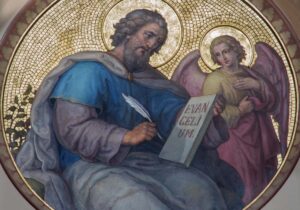
The Gospel of Matthew was written by — you guessed it — Matthew. But he also went by the name Levi, and before he followed Jesus, he was a tax collector. His name, Matthew, means gift of God, which feels fitting for a man who gave us one of the most detailed accounts of Jesus’ life.
While Matthew’s Gospel is relevant to all of us, it was written primarily to a Jewish audience. This is why Matthew constantly quotes from the Old Testament — his readers were deeply familiar with it. He was helping them see that Jesus is their long-promised, long-awaited King.
This shapes everything about the Gospel. Matthew’s primary focus is presenting Jesus as the King of the Jews — the promised Messiah who fulfils what the prophets foretold, the one destined to sit on the throne of the great King David. It’s why Matthew is so careful to highlight Jesus’ lineage and establish that He is a direct descendant of David.
A Hidden Code in the Genealogy
When Matthew records Jesus’ ancestry, he arranges it into three groups of fourteen — the first from Abraham to King David, then from David to the Babylonian exile, then from the exile to Jesus. Three groups of fourteen, perfectly structured.
This is not an accident. In Hebrew, every name has a numerical value. The numerical value of the name David in Hebrew is 14. By structuring the genealogy as 3 × 14, Matthew is signalling something unmistakable to his Jewish readers: Jesus is the royal heir in the line of David, and He has arrived at exactly the right time.
The Kingship Thread Running Through the Whole Gospel
Matthew records the wise men from the east coming to worship Jesus as a baby — and there’s a compelling possibility that these men were not just scholars or astrologers, but king-makers. In their culture, they held the authority to declare who was king. Their visit, then, carries far more weight than a simple act of gift-giving.
This theme of Jesus as King doesn’t stop at His birth. It runs all the way to His crucifixion. Matthew records Jesus being given a crown of thorns, a sceptre placed in His hand mockingly, and soldiers taunting Him with the title “King of the Jews.” Matthew tells it this way deliberately — so that we can look beyond the mockery and recognise that every one of those symbols, however cruelly given, was entirely appropriate for the true King.
There is also a quiet and beautiful parallel between the first question in the Old Testament and the first question in the New. In the Old Testament, God asks the first Adam: “Where are you?” In the New Testament, the first question is asked about the last Adam — Jesus — by the wise men: “Where is He who is born King of the Jews?”
The Story of Israel Is the Story of Jesus
One of the most astonishing things Matthew does is show his readers that the life of Jesus mirrors the history of Israel — almost point for point.
The Israelites entered the Promised Land by crossing the river Jordan. Jesus entered His public ministry by going into the river Jordan at His baptism. Israel was tested in the wilderness for forty years. Jesus was tempted in the wilderness for forty days. Israel went from the Promised Land down to Egypt, then returned years later. Jesus, born in Israel, fled to Egypt as a child, then came back when He was older.
In the Old Testament, Moses gathered the people of Israel into twelve tribes. Jesus gathered twelve apostles. Moses ascended a mountain to receive the Law and then came down to teach it to the people. Jesus ascended a mountain and gave us what we now call the Sermon on the Mount. And just as Israel had the first five books of the Bible — the Torah — as their foundational law, Matthew arranges Jesus’ teachings into five distinct blocks of sermons.
Jesus isn’t just like Israel. He is the true Israel, doing perfectly what Israel could not.
The Number 40 and a Surprising Detail About Matthew Itself
The number forty in the Bible is consistently a number of testing. Israel was tested for forty years in the wilderness. Jesus was tested for forty days. The Gospel of Matthew was written to a Jewish audience and, among other things, tells the story of the Jews of Jesus’ generation being tested — would they accept their promised Messiah?
Here is a remarkable detail: the Gospel of Matthew is the 40th book in the Bible. It’s almost as if the placement itself is part of the message.
The Two Messiahs the Jews Were Expecting
Many people don’t know this, but the Jewish people were actually waiting for two Messiahs. The first was called Messiah Ben Joseph — the Messiah descended from Joseph, one of the twelve sons of Jacob — who would be the suffering servant. The second was Messiah Ben David — the Messiah descended from David — who would be the ruling King.
Jesus came as both. He was the suffering servant and the ruling King, fulfilling both expectations in one person — something no one had fully anticipated.
Why “Kingdom of Heaven” Instead of “Kingdom of God”?
You may have noticed that Matthew uses the phrase “kingdom of heaven” far more often than “kingdom of God.” The other Gospel writers tend to say “kingdom of God.” Matthew’s choice is intentional: his Jewish readers were careful to avoid speaking the name of God out of reverence, so Matthew uses “heaven” as a respectful stand-in. Same meaning, different sensitivity to his audience.
The Gospel That Ends Where It Begins
Matthew’s Gospel begins with the angel announcing that the child born to Mary will be called Immanuel — which means God with us. It ends with the risen Jesus telling His disciples, “I am with you always.” The whole Gospel is bookended by the same promise: God is with us. It’s not an accident. It’s a declaration.
The Great Commission Was Given at a Crossroads — Literally
When Jesus gives the Great Commission to His disciples at Galilee, He chooses a location where the roads from east, west, north, and south all converged. He didn’t give the command to go into all the world from just anywhere. He gave it from a place where His disciples could immediately turn and walk in every direction. The geography was the sermon.
The Gospel of Matthew is a masterwork — layered, deliberate, and full of meaning that rewards the careful reader. The more you look, the more you find.





One Response
This was really interesting, and such deep insights form the the gospel of Matthew, I see it now.