Actually, not a fact, but more of a thought
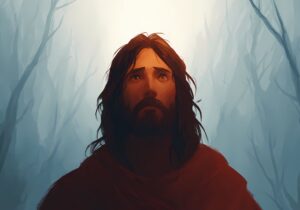
Why did Jesus’ disciples sometimes not recognize Him after the resurrection? Could it be because He retained His crucifixion body? Just as He still had the wounds in His hands, perhaps He also retained other marks from His crucifixion. Could His beard, for example, have been ripped out?
It’s just a thought, but it makes you wonder!
The significance of the number 40
The number 40 in the Bible is generally associated with a period of testing. Israel was tested for 40 years in the wilderness, and Jesus was tested for 40 days in the wilderness.
The Gospel of Matthew was written primarily for the Jews. Throughout the Gospel, we also see how many of the Jews of Jesus’ day rejected Him. In a sense, the people of that generation were being tested: would they recognize and accept their Messiah?
And guess what? The Gospel of Matthew is the 40th book of the Bible.
Coincidence? Maybe. But it’s certainly interesting to think about!
The two Messiahs
Apparently, some Jewish traditions were waiting for two different Messiahs: Messiah ben Joseph, or Messiah the son of Joseph, and Messiah ben David, the son of David.
They believed that the first would be the suffering servant, while the second would be the ruling king.
Jesus came as both.
He came as the suffering servant, who would lay down His life for us. And He is also the ruling King, who will reign forever.
Where Jesus gave the Great Commission
Jesus gave the Great Commission to His disciples in Galilee, at a place where roads from the east, west, north, and south converged.
Think about the significance of that.
Jesus was sending His disciples out into the world, and He gave them the Great Commission at a place from which people were constantly coming and going. From there, the disciples could go out and take the Gospel to the nations.
“Go and make disciples of all nations…” — Matthew 28:19